


Finding a Custom Metal Fabrication Shop Near You
Last Updated: October 25, 2026
Quick Summary
A custom metal fabrication shop near you builds raw steel, aluminum, and stainless into finished pieces made to your measurements, from firewood racks and fireplace toolsets to signage, brackets, railings, and one-off parts. A metal fabrication shop starts from your project requirements, checks material specifications, and works through design, cutting, forming, and joining and finishing to a finished piece. Shops with end-to-end services handle all four stages under one roof.
Four core methods cover most custom metalwork: cutting, bending and forming, welding, and machining.
Laser cutting suits thin sheet up to roughly 1/4 inch, while plasma cutting handles 1/4 inch and up.
A complete quote request includes dimensions, material preference, quantity, finish, load requirements, site constraints, deadline, and budget range.
Pricing depends on five factors: material, labor hours, complexity, finish, and quantity.
Ask which cutting and forming methods a shop runs in-house and what it sends out before you commit.
Table of Contents
What a Custom Metal Fabrication Shop Near You Actually Does
Types of Metal Fabrication You Can Request
Cutting, Bending, and Forming
Welding and On-Site Repair
Custom Metal Fabrication Services for Homes and Businesses
Custom Steel Fabrication: Materials and Design Choices
How to Prepare a Metal Fabrication Quote Request
What Each Item Actually Does to the Estimate
Formats That Speed Up a Quote
What Drives Cost, Lead Times, and Scheduling
How Each Cost Factor Works
Minimum Charges and Quote Structure
Lead Times and Scheduling
How to Evaluate a Shop's Capabilities and Finished Work
Request a Quote from LAZY K Metalworks
Frequently Asked Questions
What a Custom Metal Fabrication Shop Near You Actually Does
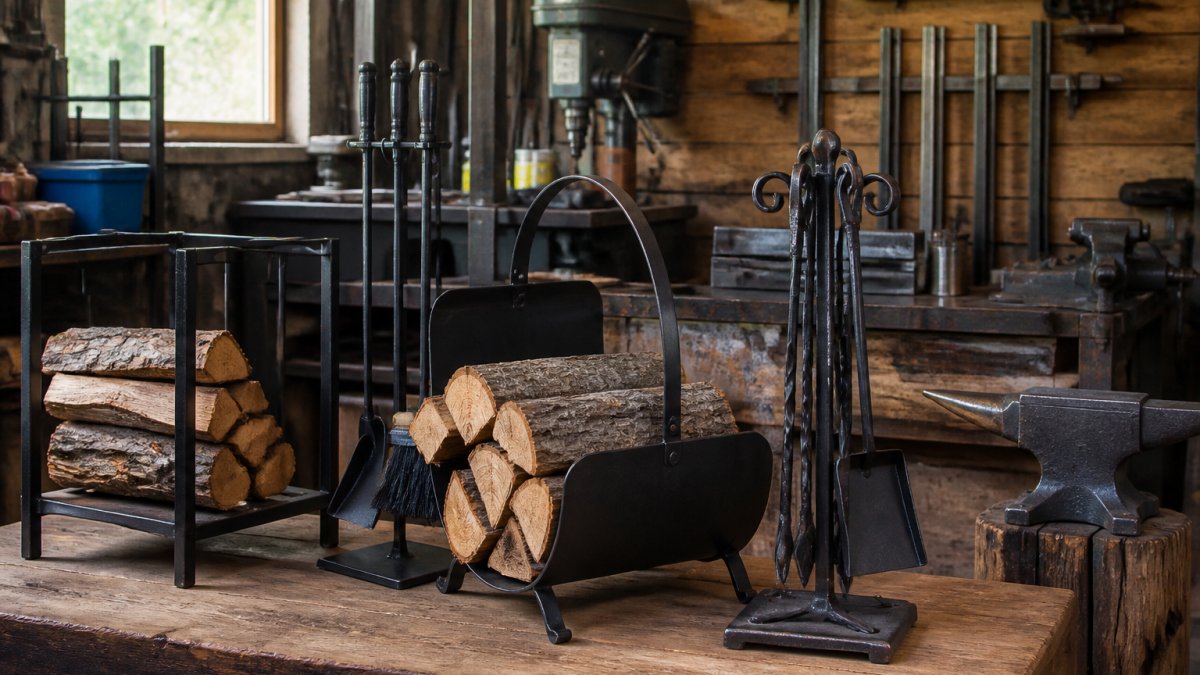
A custom metal fabrication shop near you turns raw steel, aluminum, and stainless into finished pieces built to your measurements: firewood racks, fireplace toolsets, signage, brackets, railings, and one-off parts.

Big-box metal goods are stamped to a fixed size and shipped from a warehouse.
The work usually breaks into four stages: design and measurement, cutting, forming, and joining and finishing. A shop with end-to-end services handles all four under one roof, because every vendor handoff is a chance for a dimension to drift.
Types of Metal Fabrication You Can Request
Four core methods cover most custom metalwork: cutting, bending and forming, welding, and machining. Most projects use two or three together: a firewood rack needs cutting, bending, and welding, while a precision bracket might need all four plus CNC machining.
Cutting, Bending, and Forming
Cutting separates stock into blanks. Laser cutting gives clean edges on thin sheet and holds tight tolerances. Plasma cutting handles thicker plate faster and costs less per part. Shops may also use sawing, shearing, or waterjet depending on the material.
Bending and forming shape those blanks into three dimensions. Press brakes fold sheet into angles and channels. Rolling curves plate into arcs. Roll forming produces long, consistent profiles.
Here is how the common cutting methods compare:
Method | Best For | Typical Material Thickness | Edge Quality |
Laser cutting | Thin sheet, intricate shapes | Up to roughly 1/4 inch | Very clean |
Plasma cutting | Thick plate, fast turnaround | 1/4 inch and up | Good, slightly rougher |
Waterjet | Heat-sensitive metals, thick stock | Wide range | Clean, no heat distortion |
Sawing and shearing | Straight cuts, bar and plate | Varies by equipment | Straight, mill finish |
Welding and On-Site Repair
Welding joins the formed pieces into a single structure. MIG welding suits steel production work. TIG welding gives finer control on stainless and aluminum. A good shop matches the process to the metal rather than forcing one method onto everything.
Repair covers cracked frames, failed welds, bent railings, and worn hinges. Some shops offer mobile and on-site welding for pieces too large or too fixed to move.
Custom Metal Fabrication Services for Homes and Businesses
Custom metal fabrication services split into three markets: residential, commercial, and industrial. The methods overlap, but the priorities do not.
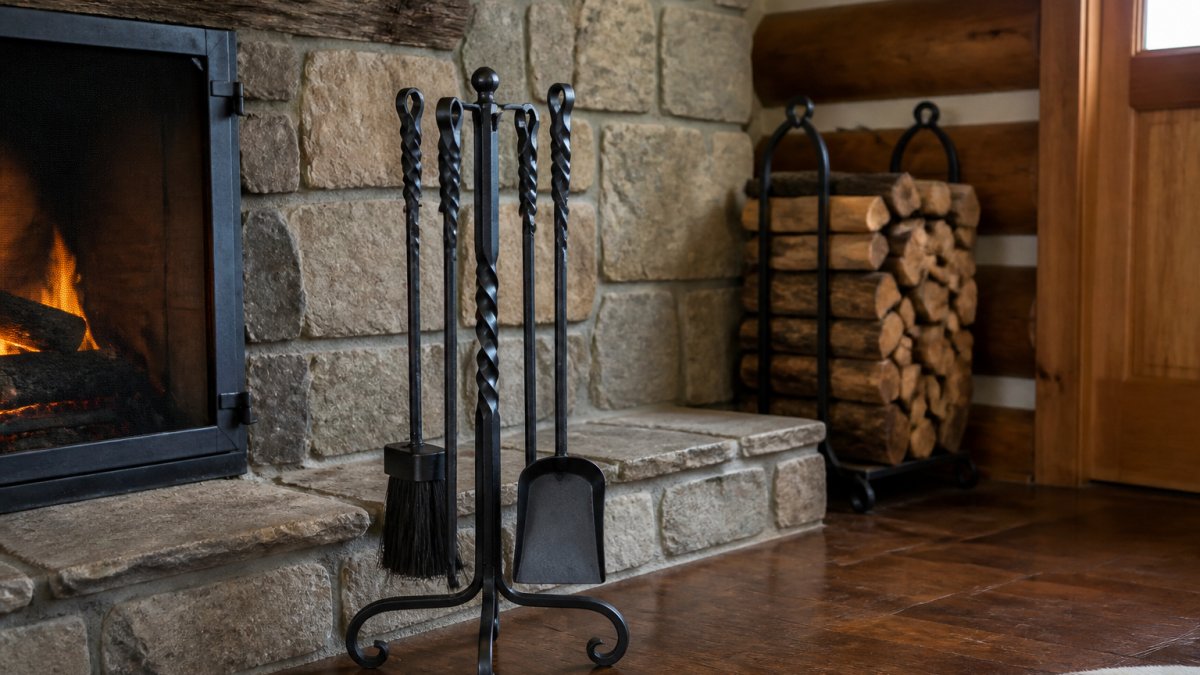
Residential projects favor appearance and fit: a firewood rack that matches a hearth's odd dimensions, a fireplace toolset that feels solid in the hand, or a custom wildlife silhouette for a cabin wall.
Commercial projects favor durability and brand consistency: custom metal signs, display fixtures, and architectural trim must survive daily use and look right for years. Industrial projects favor precision parts, production volume, and repeatability.
A shop strong in one market is not automatically strong in another: one that excels at decorative custom metalwork may not hold tolerances for production fabrication. To see what a working shop produces, browse the shop for purchasable metal products that match these services.
Custom Steel Fabrication: Materials and Design Choices
Steel is the default for structural and outdoor metalwork: it is strong, weldable, and holds up to weather when finished properly. Custom steel fabrication covers everything from firewood racks to structural frames.
Material choice should follow the job, not the other way around:
Carbon steel for strength and value on structural and decorative work
Stainless steel for wet or coastal environments where rust resistance matters
Aluminum for lightweight pieces that still need corrosion resistance
Corten steel for outdoor pieces where a weathered patina is the point
Design choices matter as much as metal choice.
A common mistake is choosing a material by price alone. The cheaper metal often costs more over the life of the piece once refinishing and replacement enter the picture.
How to Prepare a Metal Fabrication Quote Request
A complete quote request gets you an accurate number faster. Shops quote what they can measure, and vague requests produce vague estimates that become change orders later. Give the estimator enough information to price the job without guessing.
Prepare these items before you contact a shop:
Dimensions, in a sketch or drawing with all measurements labeled
Material preference, or a note that you want a recommendation
Quantity, including whether this is a one-off or a production run
Finish and color requirements
What Each Item Actually Does to the Estimate
Dimensions are the first thing an estimator checks, because every cut, bend, and weld is priced off them.
Material preference changes both base cost and welding process.
Quantity changes the estimate math most.
Finish is a real line item, not a free add-on.
Site constraints and photos matter for anything installing into an existing space.
Deadlines and budget range let the shop propose the right approach instead of the most expensive one.
Pro Tip Ask the shop to list its assumptions in the written estimate: material grade, finish, quantity, tolerance, and lead time. Comparing two quotes is only meaningful when both state the same assumptions.
Formats That Speed Up a Quote
Hand sketch with labeled dimensions for simple one-off pieces like racks, brackets, and toolsets.
Dimensioned drawing for anything structural, anything that must fit an existing opening, or anything with a tolerance requirement.
Photos with a tape measure in frame for site-fit work, so the shop can verify scale.
A short written scope describing use, environment, finish, and deadline, even if it is only a few sentences.
A shop that asks follow-up questions is doing its job. One that quotes a vague request without comment will discover the missing details later, usually as a change order.
What Drives Cost, Lead Times, and Scheduling
Pricing depends on five factors: material, labor hours, complexity, finish, and quantity. Material cost tracks the metal market; labor tracks how many steps the piece needs; complexity drives both. Understanding how each factor moves the number helps you compare quotes and make design choices that lower cost without lowering quality.
How Each Cost Factor Works
Material. Metal is priced by grade, thickness, and form (sheet, plate, tube, bar, angle).
Labor hours. Every cut, bend, weld, grind, and finish step is time.
Finish. Powder coating, paint, clear coat, and plating each add prep, application, and cure time.
Quantity. Setup time, programming, and fixture building happen once. Spread across fifty parts, those costs shrink per unit; across one, you carry all of it.
Minimum Charges and Quote Structure
Most custom shops have a minimum charge or job size, because paperwork, setup, and scheduling cost the same whether the job is one bracket or fifty. Ask about the minimum before requesting a single small part.
We do not publish flat prices, and we would be wary of any shop that does. Pricing depends on the specifics of your project, and a real number requires a real quote.
Lead Times and Scheduling
Lead times depend on shop capacity and scheduling. Simple cut-and-weld work moves faster than a piece needing machining, finishing, and assembly, and custom work takes longer than catalog work by definition.
Think about scheduling in stages: design review and quote approval, material ordering, cutting and forming, welding, finishing, and delivery or installation. Each stage has its own queue, and the shop's backlog affects all of them.
Watch Out The most common cause of a missed deadline is a late design change after material is cut. Approve the drawing before the shop orders material, and confirm the finish before finishing is scheduled.
Ask for a realistic turnaround on a project like yours and what could push it. A shop that gives a range and names the risks is more useful than one that promises a single date. Share any hard installation date at the quote stage so scheduling can account for it.
How to Evaluate a Shop's Capabilities and Finished Work
Judge a shop on three things: equipment, process, and evidence. Equipment capabilities tell you what the shop can make. Process tells you how it controls quality. Evidence tells you whether the results hold up.
Ask these questions before you commit:
Which cutting and forming methods do you run in-house, and what do you send out?
What quality workmanship standards do you hold welds and finishes to?
Can I see examples of finished work close to my project type?
Who handles the design review, and will you flag problems before cutting?
Look at finished work with your hands, not just your eyes: check weld beads for consistency, run a hand along edges for burrs, look at how the finish sits in corners, and ask how the piece ages outdoors.
What most guides miss is the design-for-manufacturing conversation. Review the gallery to judge range and quality before you decide.
Request a Quote from LAZY K Metalworks
We build handcrafted metalwork in our own shop, and we stand behind what leaves it. Since 2014, thousands of customers have bought our firewood racks, fireplace toolsets, and custom metal signs, and the feedback we hear most is about sturdiness.
Here is what you get when you work with us:
Handcrafted construction in our own shop, not resold from a catalog
Custom sizing for odd hearths, tight spaces, and specific wildlife silhouettes
Custom metal fabrication and CNC services for signs, brackets, and one-off pieces
Professional and timely service from first sketch to delivery
If you are still deciding what type of work fits your project, the blog covers related metalwork topics in more depth. See the full range of custom metal signs, custom welding, and custom metal fabrication to confirm what we build and start your quote request.
Frequently Asked Questions
What should I look for in a custom metal fabrication shop?
Check four things: the shop's equipment capabilities (cutting, bending, welding, CNC), whether work is done in-house or resold, examples of past projects similar to yours, and how clearly they explain lead times and pricing factors. Ask about materials handled, especially steel, and whether they offer repair services alongside new fabrication. A shop that answers these questions directly, and shows you finished work, is a safer bet than one that only sends a price.
What information should I provide to get a metal fabrication quote?
Send a sketch or drawing with dimensions, the material you want (steel is common for outdoor and structural pieces), the finish or coating, quantity, and your deadline. Note whether the piece is for indoor or outdoor use, since that affects material and finish choices. Photos of a similar item help. The more detail you give in the quote request, the fewer back-and-forth rounds you'll need before you get an accurate number.
How long does custom metal fabrication take?
Turnaround depends on project scope, material availability, and the shop's current schedule. Simple cut-and-weld pieces can move quickly, while custom steel fabrication with finishing or CNC work takes longer. Production volume matters too: one prototype is faster than a full run. Ask for a lead time estimate in writing with your quote, and confirm whether the shop schedules work in order of deposit or by project size.
What is custom steel fabrication and is it different from general metalwork?
Custom steel fabrication means building a part or product to your specifications rather than picking from a catalog. It covers cutting, bending, forming, welding, and finishing steel into a finished piece, from firewood racks to signage to structural brackets. General metalwork often means repairs or standard pieces. The difference matters when you need exact sizing, a specific silhouette, or a one-off design that no standard product matches.
The gap between a piece that lasts a lifetime and one that rusts out in two years is rarely the metal. It is the shop. Send us your project details, and we will tell you honestly whether we are the right fit for the work. Get started with LAZY K Metalworks and request a quote on handcrafted metalwork built to be handed down.
Shop
Add lazykmetalworks.com as a preferred source on Google →
Comments