


Does Handcrafted Metal Really Last Longer Than Mass-Produced?
Last Updated: October 30, 2026
Quick Summary
Handcrafted metal often lasts longer than mass-produced pieces because a craftsperson builds each part to carry load and resist wear, while an assembly line builds to a price point. A maker can choose heavier stock, fit tighter joints, and inspect each piece, though a poorly built handcrafted piece will fail faster than a well-engineered factory one.
Four factors decide longevity: material gauge and alloy, joint integrity, finish system, and load path and movement.
Full welds along a joint beat small spot welds, which concentrate stress where failures begin.
Degrease and abrade before coating, or the finish lifts and rust starts underneath.
Inspect each season for chips, scratches, and rust blooms, especially at welds and feet.
Bolted or serviceable construction can be tightened and repaired, while sealed units often cannot.
Table of Contents
Why Handcrafted Metal Can Outlast Mass-Produced Pieces
Handcrafted metal often lasts longer than mass-produced pieces because a craftsperson builds each part to carry load and resist wear, while an assembly line builds to a price point. The short answer to why handcrafted metal can last longer than mass-produced work is that a maker can choose heavier stock, fit tighter joints, and inspect each piece. Below, we break down where that gap comes from and how to spot it before you spend a dollar.
Here is what most buying guides get wrong. They treat "handmade" as a magic word. It is not.
A poorly built handcrafted piece will fail faster than a well-engineered factory one. Production method sets the ceiling on quality, not the floor. What actually decides longevity is material gauge, joint construction, finish quality, and whether someone checked the work.
That is the lens we use in our own shop, and it is the lens this guide uses.
The Production Process: Small-Scale vs. Assembly Line
Small-scale production lets a maker adjust each piece as it is built.
On a line, a jig stamps the same bend thousands of times. That is efficient and repeatable. It also means thin stock and spot welds get chosen because they are fast, not because they are strong.
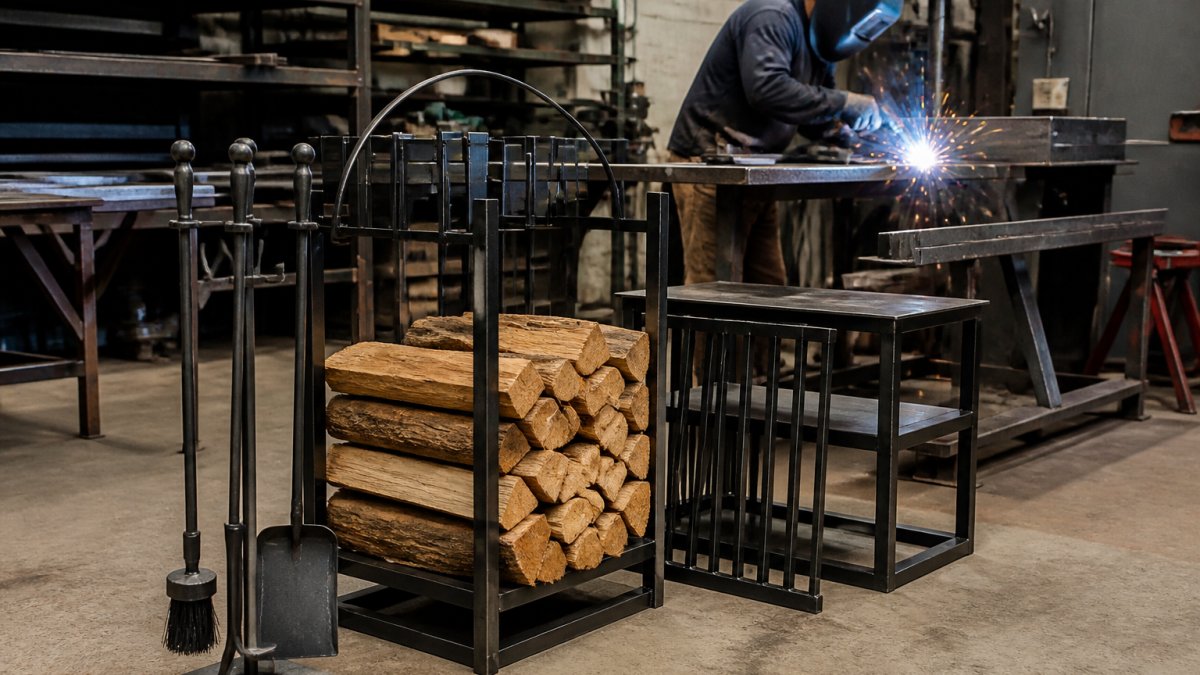
In a small shop, the production process bends and fits one piece at a time. A maker can thicken a joint, redo a weld, or swap a gauge when the load calls for it. Production time goes up. So does the robustness of the finished piece.
That trade-off is the whole story in miniature. Speed and consistency on one side, adaptability and material margin on the other.
Where the Durability Gap Actually Comes From
The durability gap comes from measurable construction factors, not from the word "handmade." Four variables decide how long a metal piece survives: material gauge and alloy, joint integrity, finish system, and how the piece handles load and movement. A craftsperson tends to win on all four because they are not forced to shave cost out of every unit, but a well-engineered factory piece can win too. Here is what to actually compare.
1. Material gauge and alloy. Heavier bar stock resists bending under a full load of split wood, while thin tube can flex, and repeated flexing can fatigue welds. Alloy matters as much as thickness, and the gauge and alloy of a piece indicate how it will behave under load.
2. Joint integrity. A hand-fitted, fully welded joint carries load across its whole length. A spot weld or rivet concentrates stress at a few points, and that is where failures begin. Look for weld penetration on both sides of a joint, no undercut, and no porosity.
3. Finish system. A properly prepped and coated surface keeps moisture off bare steel. Prep means degreasing and abrading before coating; skip it and the coating lifts, and rust starts underneath.
4. Load path and movement. A rack that sits flat on four feet spreads load; one that rocks on three concentrates it. A tool that hangs square from a welded ring lasts; one that hangs crooked stresses the weld every time it is used. Small design decisions decide whether a piece survives a decade of use.
Key Takeaway Construction and alloy matter more than handmade status alone. A poorly built handcrafted piece will fail faster than a well-engineered factory one, and a well-engineered factory piece can outlast a sloppy handmade one. Judge the four factors above, not the label.
None of this requires a laboratory to confirm. You can see the gauge, feel the joint, inspect the finish, and check how the piece sits.
Four construction factors decide how long a metal piece survives, and they are what you should compare instead of the label.
Factor | What to look for | Why it matters |
Material gauge and alloy | Heavier bar stock; known alloy | Thin tube flexes and fatigues welds |
Joint integrity | Full welds, penetration both sides, no porosity | Spot welds concentrate stress where failures begin |
Finish system | Degrease and abrade before coating | Skipped prep lets coating lift and rust start underneath |
Load path and movement | Sits flat on four feet; hangs square | Rocking or crooked hanging concentrates stress |
Materials and Metal Quality: What Separates the Two
Metal quality separates the two categories more than any marketing label. A maker who selects material for the job will outbuild a line that selects material for the budget every time.
Look at the difference in how material gets chosen:
Higher-quality materials: Heavier gauge steel or iron picked for the load it must carry
Carefully selected materials: Stock checked for straightness, scale, and defects before it is worked
Alloy consistency: Known alloy so welds and finishes behave predictably
Recycled metal: Often perfectly sound, but only when the source and alloy are controlled
Mass production is not automatically lower quality, and handmade is not automatically higher. The consumer guidance on buying durable goods from the Federal Trade Commission is clear that claims about durability should be specific and substantiated, not assumed from a label. Apply that same skepticism to any maker, including us.
Ask what gauge the stock is. Ask what alloy.
Metalwork Craftsmanship: Skill, Joinery, and Attention to Detail
Metalwork craftsmanship shows up in the joints, the corners, and the parts you cannot see once the piece is installed. If you want that level of skill in a piece of your own, see our guide to finding a custom metal fabrication shop near you. That is where human skill beats machine-made components.

Handcrafted Metal Decor: What It Means for Your Home
Handcrafted metal decor is metalwork built by hand, and it is designed to be kept for years rather than replaced.
There is a practical side and a personal one. The practical side is construction and finish. Customization is available for wildlife silhouettes, which lets a piece suit your hearth, wall, or cabin.
Our pieces are made to be handed down as family heirlooms.
How to Care for Metal Decor So It Lasts Decades
Caring for metal decor comes down to keeping moisture off bare steel, catching finish damage early, and knowing which repairs you can do yourself.
The seasonal routine:
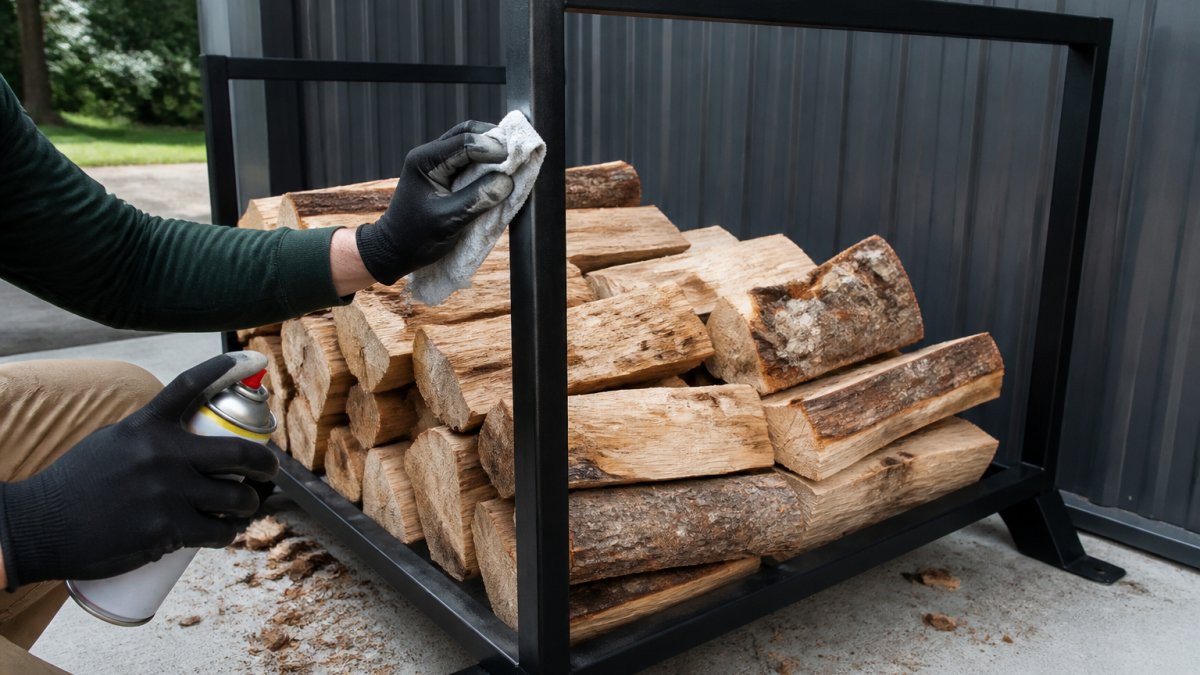
Inspect each season. Look for chips, scratches, and rust blooms, especially at welds and feet where water collects.
Touch up promptly. A small chip sealed now will not become a rust pocket later. Keep a matching touch-up coating on hand.
Keep pieces dry. Wipe down outdoor metal after wet weather and keep racks off damp ground, set feet on pavers or a mat rather than soil.
Control the environment. In a cabin, avoid trapping metal against a damp wall for months; air circulation matters.
Clean gently. A damp cloth and mild soap beat abrasive pads that scratch the coating.
Match care to use case. A covered-porch rack sees less water than one beside an exposed fire pit, and a cabin-interior tool set sees almost none. Daily-wear pieces need more frequent inspection than occasional-use decor. Exposure to water, salt, and chemicals, including pool areas and coastal air, shortens finish life and calls for more frequent touch-ups.
Repairability matters. Bolted or serviceable construction can be tightened, re-coated, and repaired, while sealed units often cannot. When you compare two pieces, consider how each can be maintained over time.
Watch Out Skipping touch-ups on outdoor pieces is the single most common way a good rack dies early. Water gets under a lifted coating, and rust spreads from the inside out, often invisibly until the metal is compromised.
Custom Metal Wildlife Art for Cabins: Built to Fit and Last
Custom metal wildlife art for cabins works best when the piece is sized to the wall and finished for the conditions. A cabin wall is not a gallery wall, and the art should be built for the space it hangs in.
Wildlife silhouettes can be customized to suit a rustic log wall or a modern cabin. Our custom metal wildlife art for cabins guide covers choosing, hanging, and caring for cabin wall decor.
Hanging matters as much as the metal. Anchor into studs or use appropriate hardware for log and panel walls, and check the hangers each season.
How to Inspect Metal Quality Before You Buy
You can judge metal quality in about five minutes with your hands and eyes. Use this checklist before you buy from anyone, including us:
Check the gauge.
Look at the welds. Full welds along the joint beat small spot welds.
Test the joints by hand. A good joint does not flex or creak under light pressure.
Inspect the finish. Even coverage, no thin spots, no overspray hiding defects.
Look for sharp edges. A careful maker deburrs and rounds exposed corners.
Ask about repairability. Bolted or serviceable construction can be fixed. Sealed units often cannot.
Ask who made it. A maker who can describe the build is a maker, not a reseller.
A useful question is how you can tell a piece is genuinely handcrafted. Ask for specifics about the build.
Choosing Handcrafted Metalwork for Your Fireplace or Cabin
Choosing handcrafted metalwork for a fireplace or cabin comes down to fit, finish, and construction. Get those three right and the piece will outlast the room it sits in.
Measure your hearth and your storage space first, so the rack fits your fireplace opening and holds a practical load. Match the finish to the environment: covered porch, cabin interior, or beside a wood stove all call for different care.
Then check the build against the checklist above. Repairability and maintenance matter here. A piece you can touch up and tighten will serve you longer than one sealed shut.
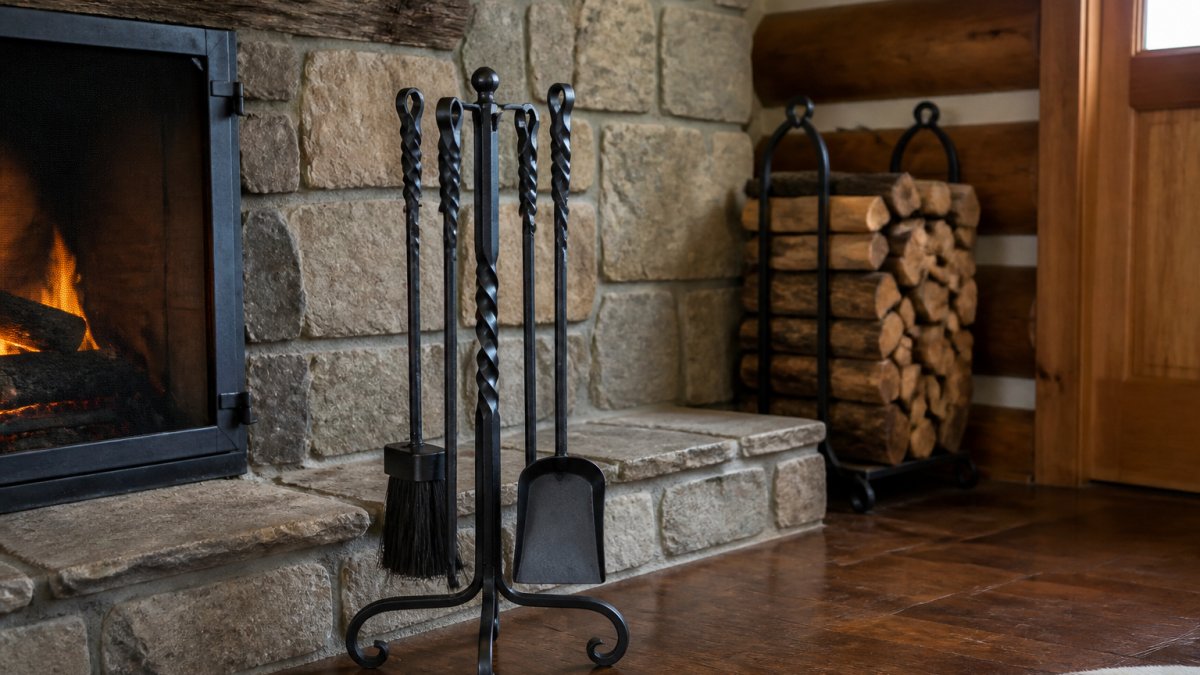
If you are outfitting a fireplace, you can explore our firewood racks and fireplace toolsets on our website.
At LAZY K Metalworks, our pieces are handcrafted to last a lifetime, with custom metal fabrication and CNC services and customizable wildlife silhouettes. We have served thousands of satisfied customers since 2014. Visit our shop to see our current products.
Frequently Asked Questions
What makes handcrafted metal products more durable than mass-produced ones?
The durability difference usually comes down to material selection and construction, not the word handcrafted by itself. That said, handcrafted metal is not automatically stronger. Ask what gauge or thickness the piece uses, how the joints are made, and what finish protects the surface before you assume it will outlast anything.
How can you tell if a metal product is well made?
Look at the joints first. Welds should be continuous and dressed smooth, not tacked in two spots. Check the thickness of the stock by hand or with the listed gauge, and confirm the finish covers edges and tight corners where rust starts. Ask which metal the piece is made from and how it was built.
Can handcrafted metal decor be repaired or refinished instead of replaced?
Metal decor with bolted or serviceable construction is often easier to repair than sealed pieces. Ask the maker upfront about touch-up finishes and whether they service what they sell.
How do you maintain metal decor so it lasts longer?
Keep the piece dry and clear of standing water, especially at the feet and joints. Wipe dust with a soft cloth, and for outdoor or fireplace pieces, inspect the finish once a year for chips or thin spots. Reapply the recommended coating before bare metal shows through. For indoor pieces, avoid harsh abrasive cleaners that strip the finish. If you buy custom metal wildlife art for cabins, ask the maker which finish was used before you plan any touch-ups.
Comments