


Durable Metal Firewood Racks for Sale: 2026 Buying Guide
Table of Contents
Why Durable Metal Firewood Racks Beat Cheap Box-Store Racks
What Separates a Rack That Lasts From One That Rusts Out
Firewood Rack Size: Matching Dimensions to Your Hearth and Log Length
Firewood Rack Capacity: Translating Pounds Into Practical Firewood
Firewood Rack Rust Prevention: Coatings, Materials, and Care
Do You Need a Firewood Rack With Cover?
Placement, Stability, and Safety for Indoor and Outdoor Use
What to Look For When Buying Durable Metal Firewood Racks for Sale
Conclusion
Frequently Asked Questions
Last Updated: October 21, 2026
Why Durable Metal Firewood Racks Beat Cheap Box-Store Racks
A durable metal firewood rack is a storage frame built from welded steel or aluminum, sized to hold split logs off the ground and away from moisture. At LAZY K Metalworks, we build ours by hand from steel in our Northern Wisconsin shop.
Here's the pattern we hear constantly: someone buys a cheap rack, it rusts through at the welds within a couple of seasons, and the logs end up in a wet pile on the patio. The frame was never the problem. The shortcuts were.
What Separates a Rack That Lasts From One That Rusts Out
Three things decide whether a metal rack survives a decade of winters: steel gauge, weld quality, and coating. Thin tubular steel flexes under a full load and cracks at the joints. Spot welds fail where a continuous weld holds. A thin paint dip chips at the first scrape and lets moisture in. A powder-coated finish over properly prepped steel resists that cycle far longer.
Watch Out The most common mistake is judging a rack by how it looks empty. Load it with wet, heavy hardwood and watch the legs. If the frame racks sideways or the feet dig into the deck, the steel is too thin for real firewood duty.
Firewood Rack Size: Matching Dimensions to Your Hearth and Log Length
Rack size comes down to two measurements: the length of your split logs and the floor space you can spare. Standard firewood is cut to 16 inches, so a rack needs an internal length a few inches beyond that to load easily. A four-foot rack holds a full row of 16-inch logs with room to spare, while a compact two-foot rack suits a small hearth or a tight porch corner.
Measure your fireplace opening, your stove's firebox, and the walkway in front of it before you shop. Then measure your log length. A rack that's too short forces you to stack logs at an angle, which wastes capacity and looks sloppy. Depth matters too: deeper racks hold more rows but push further into the room.
Rack Style | Typical Log Length | Best Placement | Footprint |
Vertical rack | 16-24 in | Tight corners, small hearths | Narrow, tall |
Two-foot horizontal | 16 in | Small fireplaces, patios | Compact |
Four-foot horizontal | 16-24 in | Living rooms, porches | Wide, low |
Carrier | 16-24 in | Moving wood from pile to fire | Handheld |
Firewood Rack Capacity: Translating Pounds Into Practical Firewood
Capacity figures mean little until you convert them into real logs. The problem is that listings quote weight limits, cubic feet, and "face cord" capacity interchangeably, so two racks that look comparable on paper can hold very different amounts of wood.
Start with the unit that matters: a face cord. A face cord is a stack 8 feet long, 4 feet high, and one log deep, 32 cubic feet of split wood. A full cord is three face cords, or 128 cubic feet.
Weight is the other half of the equation. Seasoned hardwood, oak, maple, hickory, runs roughly 3,500 to 4,500 pounds per full cord depending on species and moisture content, which works out to about 1,200 to 1,500 pounds per face cord.
Rack weight rating | Seasoned hardwood (approx.) | Seasoned softwood (approx.) | Practical burn time |
250 lb | ~2 cubic ft, about 8-12 logs | ~3 cubic ft, about 12-18 logs | One evening to one day |
500 lb | ~4 cubic ft, about 16-24 logs | ~6 cubic ft, about 24-36 logs | Two to four evenings |
1,000 lb | ~8 cubic ft, about 32-48 logs | ~12 cubic ft, about 48-72 logs | One to two weeks of regular fires |
2,000 lb | ~16 cubic ft, about 64-96 logs | ~24 cubic ft, about 96-144 logs | Three to four weeks of regular fires |
Log count depends on log diameter, so treat these as ranges. A rack loaded with 4-inch splits holds far more pieces than one loaded with 8-inch rounds.
Pro Tip Buy for the load you will actually carry, not the load you plan to carry. Most people overload a rack on the first cold snap. Size up one tier from your estimate and you will never fight a bowed frame.
Two more conversions worth knowing. First, rack dimensions and capacity are not the same thing: a 4-foot rack that is 14 inches deep and 4 feet tall holds about 18.7 cubic feet per row, or roughly half a face cord, while a 2-foot rack of the same depth and height holds about 9.3 cubic feet. Second, green wood weighs noticeably more than seasoned wood, often 20 to 50 percent more by volume, so a rack that feels solid with dry oak may sag with freshly split maple. If you stack green wood to season it, choose a rack rated well above your dry-wood estimate and leave gaps between logs for airflow.
The practical benchmark most wood burners use: a sturdy rack should hold a full day's worth of wood for a stove without sagging, and a week's worth for a fireplace without bowing.
Firewood Rack Rust Prevention: Coatings, Materials, and Care
Rust prevention starts with the material and the finish, but the details decide how long the rack lasts. Galvanized steel resists corrosion through a zinc coating that sacrifices itself before the base metal; aluminum will not rust at all, though it can oxidize and pit in coastal air; powder-coated steel adds a hard, chip-resistant layer over properly prepped metal.
The variables that actually predict service life are less visible than the finish color:
Steel gauge. Thicker steel resists flexing, and flexing is what cracks coatings and opens welds to moisture. A rack that flexes under load will rust from the inside out at the joints long before the visible surfaces show wear.
Weld quality. Continuous welds seal a joint; spot welds leave gaps where water sits. Inspect the joints where legs meet rails, that is where failures start.
Coating prep. Powder coat adheres best over clean, properly prepped steel. A coating applied over mill scale or oil will chip and lift, letting moisture underneath.
Fasteners. Bolted racks should use corrosion-resistant hardware. Standard zinc-plated bolts in a wet environment will rust and stain the frame; stainless or hot-dip galvanized fasteners last far longer.
Drainage. Water that pools in tubular legs or on flat rails accelerates corrosion. Look for open ends, drainage holes, or feet that keep the frame off the ground.
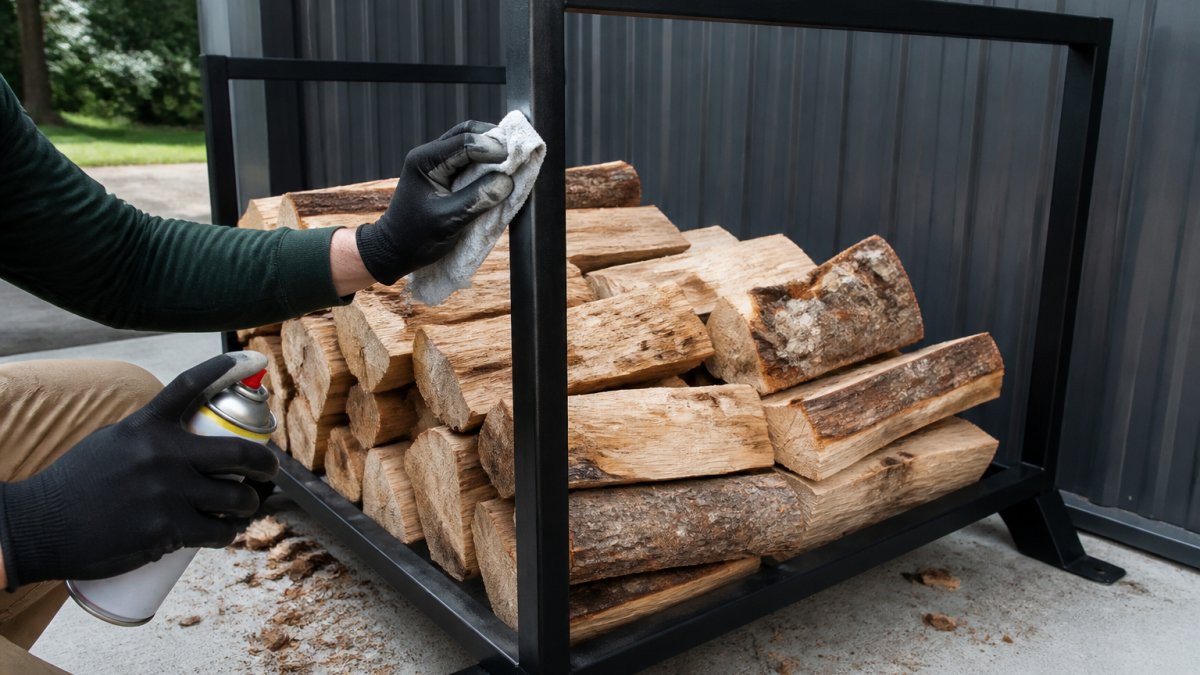
Care is simple but should be seasonal. Each fall, inspect the frame before the heating season: check welds for cracks, tighten or replace fasteners, and touch up any chips in the coating with matching paint. Keep the rack off bare ground, pavers, a deck, or concrete, so meltwater drains away. Clear snow and wet leaves from the frame rather than letting them sit.
Long-term ownership costs are mostly about replacement parts and warranty coverage. Before you buy, ask whether the manufacturer sells replacement feet, fasteners, or cover panels, and read the warranty for what it excludes, many cover the frame but not the finish, and finish is what fails first outdoors. A rack with available parts and a finish warranty is cheaper over a decade than a bargain rack you replace twice.
Choose powder-coated or galvanized steel for outdoor use
Touch up scratches with matching paint each fall
Keep feet on pavers or a deck, not directly on soil
Dry wet logs before stacking to reduce trapped moisture
Inspect welds and fasteners before each heating season
Confirm replacement parts and finish warranty before purchase
Do You Need a Firewood Rack With Cover?
A firewood rack with cover keeps rain and snow off the top of the stack while letting air move through the sides. For an outdoor rack on an exposed porch or patio, a cover is worth it: dry wood lights faster and burns cleaner. Indoors, a cover is unnecessary and can trap moisture against the wood.
Look for a cover that leaves the sides open. Fully enclosed covers hold humidity and encourage mold on the logs. A simple roof-style cover or a breathable canvas top does the job. If your rack sits under a deep porch roof, you may not need one at all.
Placement, Stability, and Safety for Indoor and Outdoor Use
Stability is the safety issue most people overlook. A tall vertical rack loaded with heavy logs becomes top-heavy, so anchor it to a wall or place it in a corner where it can't tip. Keep indoor racks at least a few feet from the firebox and clear of the hearth's clearance zone. Outdoors, set the feet on level, solid ground and check them after the first freeze.
For outdoor use, raise the base off the ground so meltwater drains away. For indoor use, choose a rack with feet that won't scratch hardwood floors. A freestanding rack that sits flat and doesn't wobble empty will usually stay put when loaded, but test it before you fill it.
What to Look For When Buying Durable Metal Firewood Racks for Sale
When you shop for durable metal firewood racks for sale, check the steel gauge, the weld quality, the coating, and the capacity rating before you look at the styling. Ask whether the rack is welded or bolted, whether it's powder-coated, and what weight it's rated to hold. Those four answers separate a lifetime purchase from a two-year disposable.
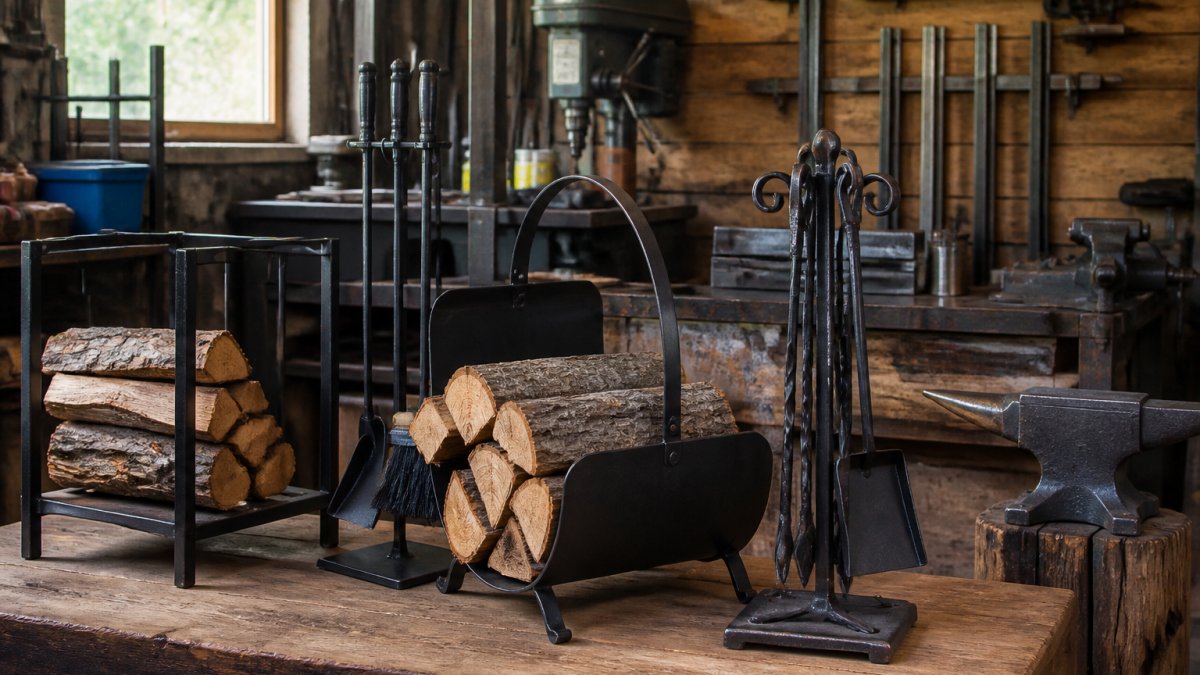
At LAZY K Metalworks, every rack is handcrafted in our shop, built from sturdy steel, and finished to last a lifetime. We also offer custom sizing for odd hearths and small fireplaces, plus wildlife silhouettes if you want a rack that doubles as decor. Our customers describe the work as solid, heavy, and beautiful, which is exactly the standard we hold. Pricing depends on size, finish, and customization, so check our site for current availability and a quote.

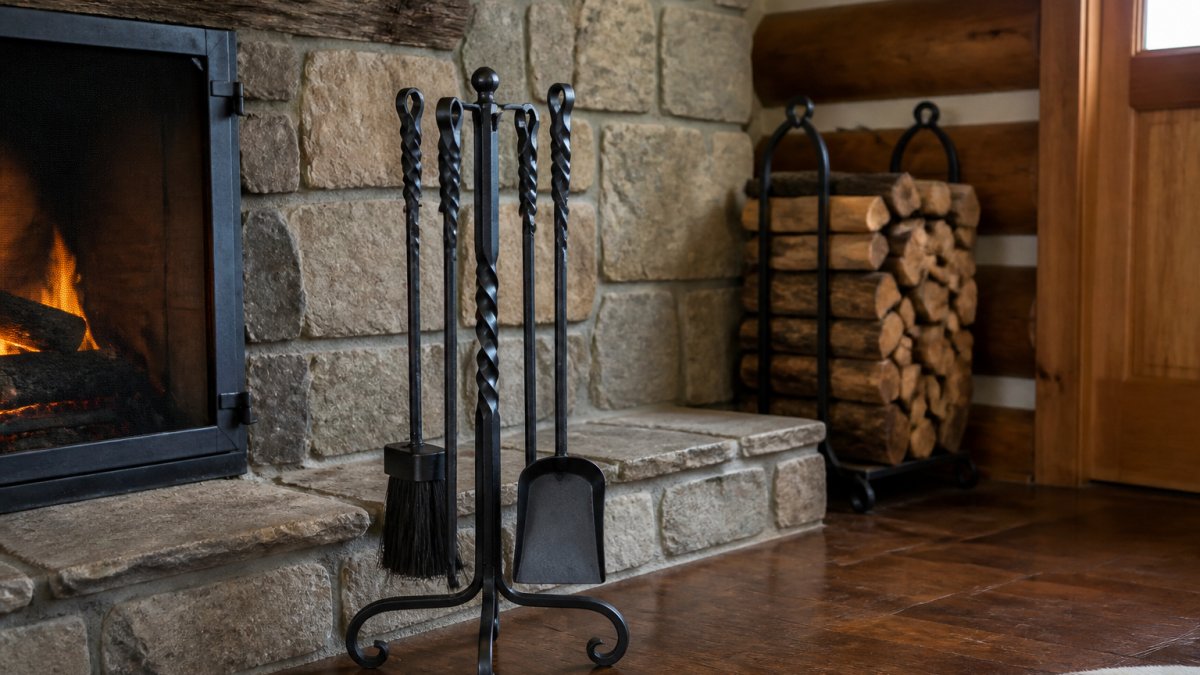
A handcrafted steel firewood rack loaded with split logs on a covered porch beside a stone fireplace, warm afternoon light, craftsmanship detail visible in the welded frame
Key Takeaway The best rack for you is the one sized to your logs, rated above your real load, and finished to survive your climate. Styling comes last.
Conclusion
Buying a firewood rack is a small decision with a long tail. A cheap rack costs you twice: once at purchase and again when you replace it. LAZY K Metalworks builds handcrafted steel racks made to last a lifetime, with sturdy construction, custom sizing, and timeless designs that serve as family heirlooms. Shop our firewood racks and fireplace toolsets to find the one that fits your hearth.
Frequently Asked Questions
What is the best material for an outdoor firewood rack?
Steel is the strongest choice for an outdoor rack, and galvanized or powder-coated steel holds up best against moisture. Aluminum resists rust well but flexes under heavy loads, while wrought iron looks good but needs regular coating checks. Look for a metal frame with a protective coating that covers welds and cut edges, since those are the first spots to corrode. A well-built steel rack keeps firewood off the ground and stays stable through freeze-thaw cycles.
How big should a firewood rack be?
Size depends on your fireplace and your log length. Measure your longest logs first, then pick a rack that holds them with a little room to spare. A four-foot rack fits most hearths and porches without crowding the space, while compact vertical racks suit small rooms. Also check the rack dimensions against your floor space and clearance from walls, and leave room to reach the back row comfortably.
How much firewood does a standard rack hold?
Capacity is usually listed in pounds, and a 1000-pound capacity rack holds roughly a face cord of split wood, depending on log size and moisture. That is often several days to a couple of weeks of burning for a typical wood stove. Translate weight into your own use: if you burn a few logs a night, a smaller rack keeps wood rotating so it stays dry and seasoned. Match capacity to how often you want to restock.
How do you keep a metal firewood rack from rusting?
Start with a rack that has a factory powder-coated or rust-resistant finish, then keep it off wet ground and out of standing water. Touch up scratches promptly with matching paint, and wipe down the frame before winter. Place the rack where air moves freely and where snow does not pile against the legs. Covering the top of the wood while leaving the sides open keeps rain off without trapping moisture, which is what actually drives rust.
U.S. Fire Administration home fire safety guidance
American Society for Testing and Materials coating standards
U.S. Department of Agriculture wood heating guidance
Shop
Comments